




Sleep disorders like sleep apnea are increasingly common, yet many people remain undiagnosed. If your doctor has recommended a sleep study, you may have heard terms like Level 2 and Level 3 sleep study. Understanding the differences between these tests and the implications for your health is essential for making informed decisions regarding the Level 2 vs Level 3 Sleep Study.
In this article, we will clarify the distinctions between Level 2 vs Level 3 Sleep Study and how they affect diagnosis and treatment options.
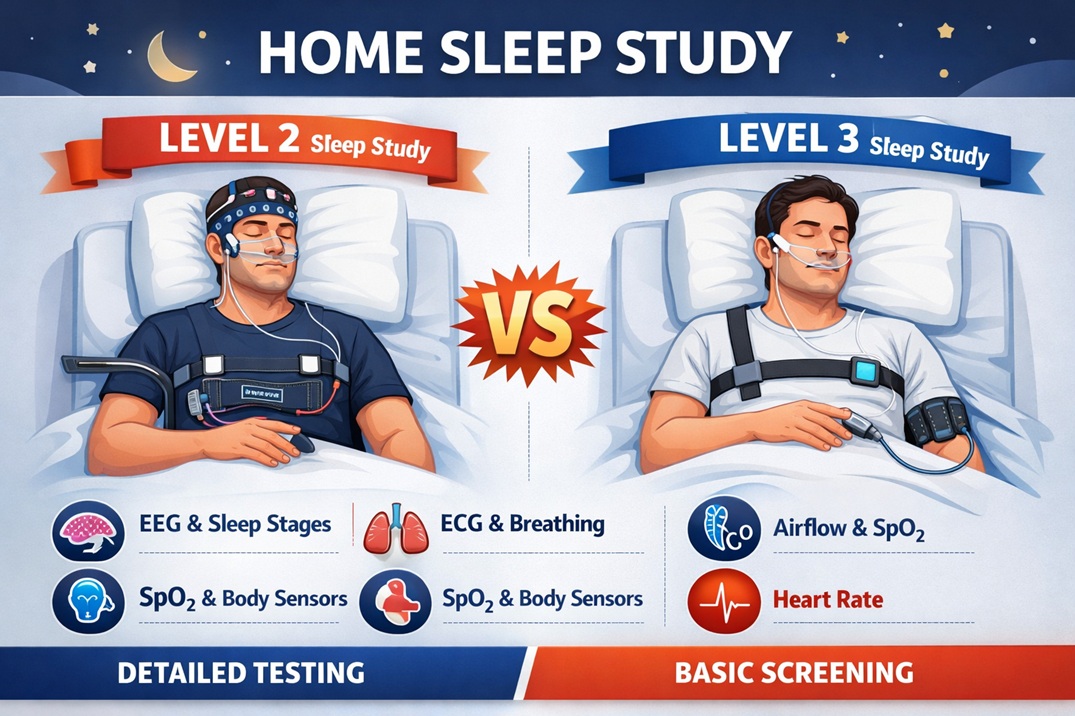
Understanding Level 2 vs Level 3 Sleep Study
Understanding the difference is crucial to choosing the right test for accurate diagnosis and treatment.
Choosing the right sleep study, whether it be a Level 2 vs Level 3 Sleep Study, is vital for effective treatment.
Understanding sleep studies is also important because sleep disorders can have significant consequences on overall health and well-being. For instance, untreated sleep apnea can lead to cardiovascular problems, diabetes, and cognitive decline. Therefore, knowing the difference between a Level 2 and Level 3 sleep study is essential for selecting the most appropriate diagnostic tool for your situation.
Ultimately, the choice between a Level 2 vs Level 3 Sleep Study depends on various factors, including the severity of symptoms.
In this article, we will explore the key differences and help you determine which one is best suited for your needs.
When it comes to assessing your sleep health, understanding the Level 2 vs Level 3 Sleep Study is crucial.
The Level 2 vs Level 3 Sleep Study comparison helps to understand which test is more suitable for individual needs.
What is a Sleep Study?
A sleep study (also called polysomnography) is a diagnostic test used to evaluate sleep disorders such as:
Common sleep disorders that warrant a sleep study include not just obstructive sleep apnea, insomnia, snoring issues, and restless leg syndrome, but also other conditions like narcolepsy and circadian rhythm disorders. Narcolepsy is characterized by excessive daytime sleepiness and sudden sleep attacks, while circadian rhythm disorders involve disruptions in the sleep-wake cycle, which can be caused by external factors such as shift work or travel across time zones.
- Obstructive Sleep Apnea (OSA)
- Insomnia
- Snoring issues
- Restless Leg Syndrome
It monitors key body functions during sleep like:
Monitoring these key body functions allows healthcare providers to gather valuable insights into the patient’s sleep patterns and overall sleep quality. For example, breathing patterns can indicate the presence of sleep apnea, while fluctuations in heart rate may reveal underlying cardiovascular issues. Oxygen levels are particularly crucial; low readings during sleep can lead to serious health complications over time.
- Breathing patterns
- Oxygen levels
- Heart rate
- Brain activity
What is a Level 2 Sleep Study?
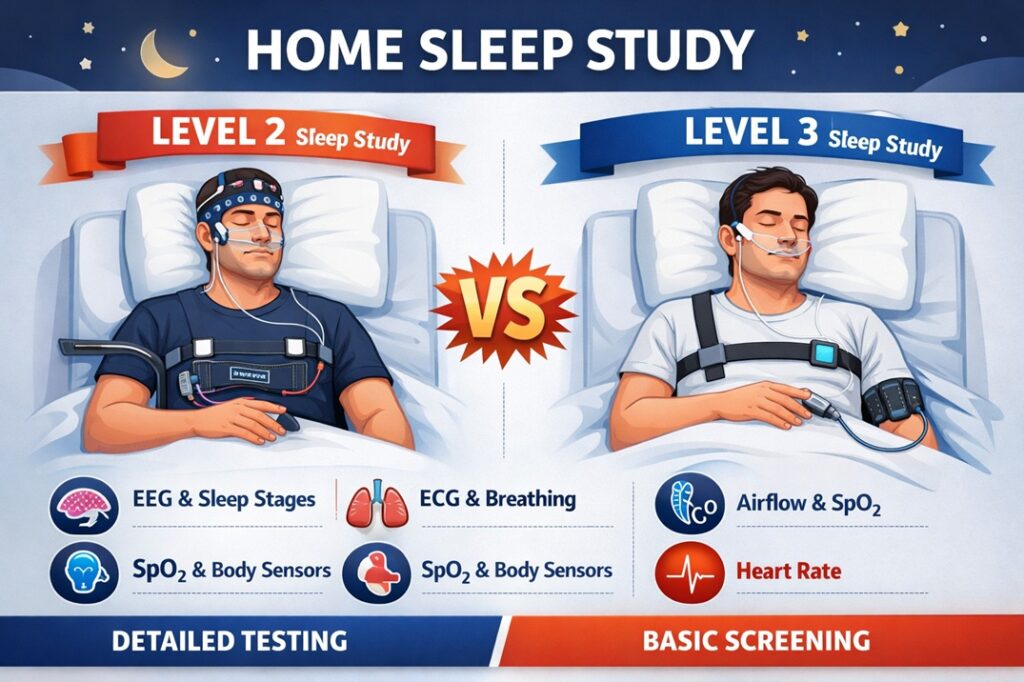
A Level 2 sleep study is a comprehensive home-based test that closely replicates a hospital sleep study.
The Level 2 vs Level 3 Sleep Study serves different purposes based on patient needs.
Level 2 sleep studies are typically conducted in the patient’s home environment, which increases comfort and may lead to more natural sleep patterns. This test is beneficial for individuals who may feel anxious or uncomfortable in a sleep lab setting. The equipment used in a Level 2 study is designed to be user-friendly and typically includes a monitor for heart rate, a device for measuring oxygen levels, and sensors for tracking breathing patterns.
This guide highlights the difference between Level 2 vs Level 3 Sleep Study, helping you make an informed decision.
✅ Features:
- Monitors brain activity (EEG)
- Eye movement
- Muscle activity
- Heart rate
- Oxygen levels
- Airflow and breathing effort
🏠 Where is it done?
- At home, but with advanced equipment
👨⚕️ Best for:
- Accurate diagnosis of sleep apnea
- Patients needing detailed sleep analysis
- Those who cannot visit a sleep lab
👉 Closest alternative to a hospital sleep study
What is a Level 3 Sleep Study?
A Level 3 sleep study is a simplified home sleep test focused mainly on breathing.
Understanding the Level 2 vs Level 3 Sleep Study is essential for accurate diagnosis.
One of the primary advantages of a Level 3 sleep study is its simplicity. It generally requires less equipment and fewer sensors, making it easier for patients to set up and use at home. However, this comes at the cost of comprehensive data collection, so it may not be suitable for everyone, especially those with complex sleep disorders.
✅ Features:
- Oxygen levels (SpO2)
- Airflow
- Breathing effort
- Heart rate
❌ What it does NOT measure:
- Brain activity (EEG)
- Sleep stages
🏠 Where is it done?
Level 3 studies are designed for quick assessments to determine if sleep apnea is present. They are especially useful for patients who exhibit clear symptoms but may be hesitant to undergo a more extensive evaluation. These tests are not as capable of detecting other sleep-related issues as Level 2 studies, which can analyze brain activity and sleep stages in detail.
Efficiently assessing your sleep health requires knowledge of the Level 2 vs Level 3 Sleep Study.
- Easily done at home with portable devices
👨⚕️ Best for:
- Suspected sleep apnea
- Initial screening
- Cost-sensitive patients
Key Differences: Level 2 vs Level 3
In summary, Level 2 sleep studies provide a comprehensive overview that includes brain activity monitoring, making them suitable for accurate diagnoses. In contrast, Level 3 studies are more focused on breathing patterns, offering a quicker and more cost-effective way to screen for sleep apnea. The choice between these two types of studies should be based on symptoms, medical history, and the advice of a healthcare professional.
Ultimately, the choice between a Level 2 vs Level 3 Sleep Study can significantly impact your health outcomes.
| Feature | Level 2 Sleep Study | Level 3 Sleep Study |
|---|---|---|
| Monitoring Level | Detailed | Basic |
| Brain Activity (EEG) | ✅ Yes | ❌ No |
| Sleep Stages | ✅ Yes | ❌ No |
| Accuracy | High | Moderate |
| Cost | Higher | Affordable |
| Best Use | Diagnosis | Screening |
Which One Should You Choose?
When deciding which sleep study to choose, consider factors such as the severity of your symptoms, previous test results, and your healthcare provider’s recommendations. A Level 2 sleep study may be appropriate for those with severe symptoms, while a Level 3 study could be sufficient for individuals seeking preliminary information.
Consulting on the Level 2 vs Level 3 Sleep Study can guide treatment effectively.
👉 Choose Level 2 Sleep Study if:
- You need a detailed diagnosis
- Symptoms are severe
- Previous tests were inconclusive
👉 Choose Level 3 Sleep Study if:
- You want a quick and affordable screening
- You suspect mild to moderate sleep apnea
- Doctor recommends home testing first
Cost of Sleep Study in Bangalore (2026)
It is important to note that prices for sleep studies can vary widely based on location and the specific services included in the test. Patients should inquire about what is covered by insurance as well, as some plans may cover the cost of home-based tests differently than lab-based studies.
- Level 3 Sleep Study: ₹2,000 – ₹6,000
- Level 2 Sleep Study: ₹6,000 – ₹15,000
💡 Home-based tests are significantly cheaper than hospital-based studies.
Symptoms You Should Not Ignore
If you are experiencing symptoms that may indicate a sleep disorder, it is advisable to consult with a healthcare provider who can guide you toward the appropriate diagnostic test. Early detection and treatment of sleep disorders can significantly improve quality of life, enhance daytime alertness, and reduce the risk of developing related health issues.
You may need a sleep study if you experience:
- Loud snoring
- Daytime sleepiness
- Breathing pauses during sleep
- Morning headaches
- Poor concentration
Why Choose Prime Healers for Sleep Study at Home?
Prime Healers offers convenient and accurate home sleep testing:
- ✔ At-home setup by experts
- ✔ Affordable pricing
- ✔ Doctor-reviewed reports
- ✔ Quick results
- ✔ End-to-end support
Final Thoughts
Understanding the implications of a Level 2 vs Level 3 Sleep Study can empower patients in their treatment journey.
Both Level 2 and Level 3 sleep studies play an important role in diagnosing sleep disorders.
Both Level 2 vs Level 3 Sleep Study options have their unique benefits.
Additionally, both types of sleep studies can provide valuable insights into sleep patterns and behaviors. Understanding these patterns can lead to better management strategies, whether through lifestyle changes, medical interventions, or continuous positive airway pressure (CPAP) therapy for those diagnosed with sleep apnea.
- Level 3 → Best for quick screening
- Level 2 → Best for accurate diagnosis
Choosing the right test can help you start the right treatment early and improve your quality of life.
Choosing wisely between Level 2 vs Level 3 Sleep Study can facilitate better health management.
Book Your Sleep Study Today
📞 Contact Prime Healers – +91-7975708181
💬 Get expert advice on choosing the right sleep test and understand the differences between a Level 2 vs Level 3 Sleep Study. Our trained professionals can help you navigate your options and ensure you receive the most appropriate care for your sleep needs.
Get in touch to discuss the Level 2 vs Level 3 Sleep Study and find the best fit for your needs.